Tributes Pour In as Supreme Court Judge Mohammed Ibrahim Passes On
Justice Ibrahim Mohammed died after a period of illness. Sources close to the family indicate that he had been taken to India for specialised treatment, but doctors later advised that he be returned to Kenya to spend his final days. Before his appointment to the Bench, Justice Ibrahim had already built a distinguished career as […]

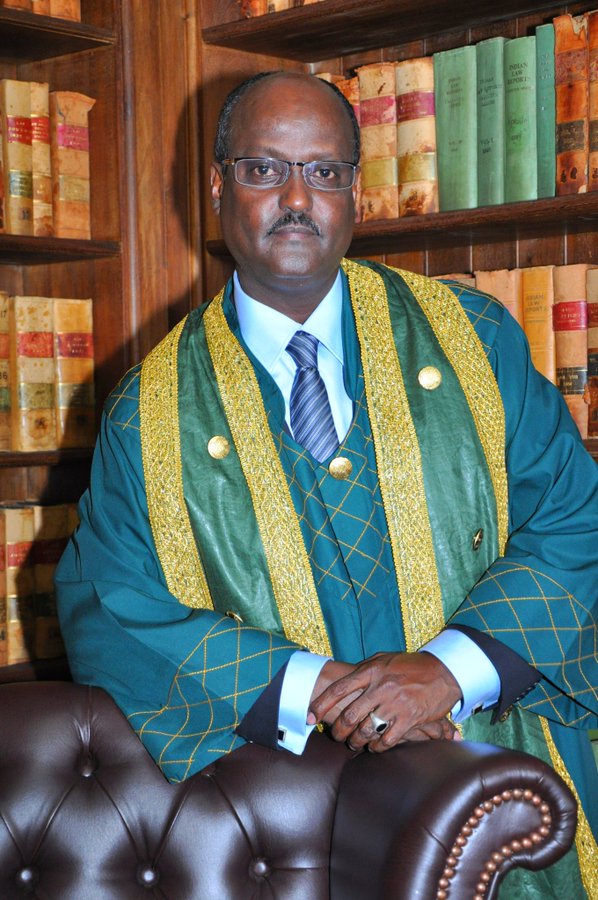
Justice Ibrahim Mohammed died after a period of illness. Sources close to the family indicate that he had been taken to India for specialised treatment, but doctors later advised that he be returned to Kenya to spend his final days.
Before his appointment to the Bench, Justice Ibrahim had already built a distinguished career as a trailblazing advocate, human rights defender, and public-spirited lawyer. Admitted to the Bar in 1982, he made history as the first member of the Kenyan Somali community to be admitted as an Advocate of the High Court of Kenya.
He practised law with several notable firms before establishing his own practice. During some of Kenya’s most politically turbulent periods, he became deeply involved in public interest litigation and civic advocacy, championing the rights of marginalised communities and promoting access to justice.
Justice Ibrahim worked closely with organisations such as Kituo cha Sheria, the Lawyers Committee for Human Rights, and as a founding trustee of the Mwangaza Trust.
Through this work, he demonstrated a lifelong commitment to inclusion, constitutional rights, and the defence of fundamental freedoms.

During Kenya’s struggle for multiparty democracy in the late 1980s and early 1990s, he stood firmly with pro-democracy forces, providing legal support to activists and vulnerable groups. His principled stance led to his detention without trial, an experience that profoundly shaped his enduring devotion to constitutionalism, the rule of law, and the protection of human dignity.
He also served as a Council Member of the Law Society of Kenya, where he contributed to strengthening the legal profession and promoting ethical practice.
Justice Ibrahim joined the Judiciary in 2003 as a Judge of the High Court of Kenya, serving with distinction across various stations. In 2011, he was elevated to the Supreme Court as a member of the inaugural bench, entrusted with the historic responsibility of interpreting and giving effect to Kenya’s transformative 2010 Constitution.
His judicial career was marked by intellectual rigour, calm impartiality, and a deep concern for the vulnerable and marginalised.

In addition to his judicial duties, Hon. Justice Mohammed Kadhar Ibrahim was unanimously elected in 2022 by his fellow Supreme Court justices to represent the Court at the Judicial Service Commission (JSC). As a JSC Commissioner, he brought a steadfast commitment to judicial independence and accountability, serving as a measured and thoughtful voice on matters of governance, appointments, discipline, and institutional strengthening.
Justice Ibrahim consistently held that judicial independence and accountability are complementary, not competing, values. He championed transparency, integrity, and fidelity to constitutional norms, helping to reinforce public confidence in the Judiciary during periods of intense public and political scrutiny.
He also served as Chairperson of the Judiciary Committee on Elections, and earlier as Chairperson of the ad hoc Judiciary Working Committee on Election Preparations. Through these roles, he significantly strengthened institutional preparedness and enhanced public trust in the adjudication of electoral disputes.
A jurist of exceptional humility and integrity, Justice Ibrahim will be remembered as a steadfast guardian of constitutionalism, electoral justice, and human dignity. He was a collegial judge, a quiet mentor, and a firm believer in principles over prominence.
Reporter
0 Comments
Leave a Comment